
Deep-sea mining: legal situation, securing raw materials and green economy
The Eckernförde section of the Schleswig-Holstein University Society is hosting its lecture series at the Schleswig-Holstein Künstlerhaus otte1.
On Wednesday, 21 May 2025 at 19:00, Prof. Dr Uwe K. Jenisch will speak about ‘Deep-sea mining: legal situation, securing raw materials and green economy’.
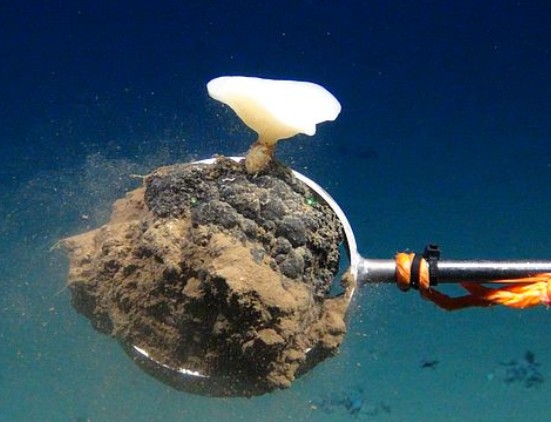
The current debate on the security of supply of raw materials for industry is about reliable sources of supply. The UN Convention on the Law of the Sea of 1982 opens up the possibility of mining on the seabed (deep-sea mining) in international and national maritime zones. In addition to mining on land, there is now the option of marine mining in the form of manganese nodules, massive sulphides and polymetallic crusts with their high contents of copper, cobalt, nickel, manganese, other metals and rare earths.
Deep-sea mining is controversial for environmental reasons and requires the highest safety standards. At the same time, it offers interesting new technologies and opportunities for co-operation. The International Seabed Authority (ISA) in Jamaica has so far awarded 30 licences for the exploration and sampling of deposits, including two to Germany. The ISA is currently preparing the ‘Mining Code’ for commercial mining with regulations for authorisation, safety, environmental protection and taxation.
The more vigorously the new green industries for the energy and transport transition and for decarbonising the entire economy are implemented, the greater the demand for raw materials. A single marine mining unit could largely replace German imports of cobalt, manganese and nickel. In the race to minimise the impact on nature, responsible marine mining technology has the potential to make a contribution and accelerate the energy transition. This requires technological openness. Otherwise, the only option is to intensify land-based mining with all its negative consequences. Recycling will help a little.
Import-dependent Germany consumes approx. 6-8% of the world’s mining products. Overall, Germany’s interests in deep sea mining are threefold:
– Securing the supply of raw materials,
– enforce environmental protection,
– offer new technologies.
The lecture will take place in the Künstlerhaus Schleswig-Holstein, Ottestraße 1, 24340 Eckernförde.
Admission: Non-members € 5. Members of all sections, pupils, students and trainees free of charge